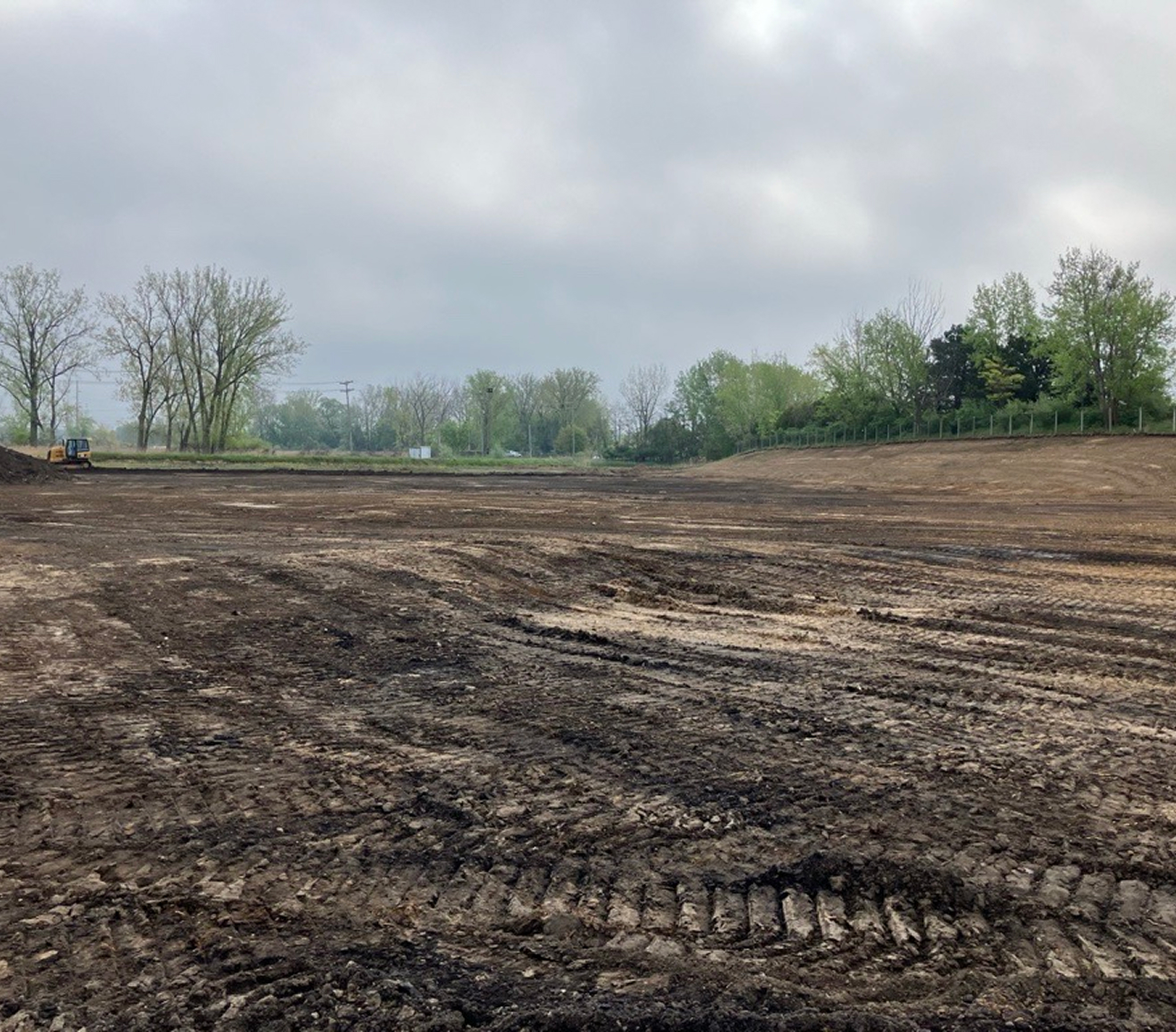
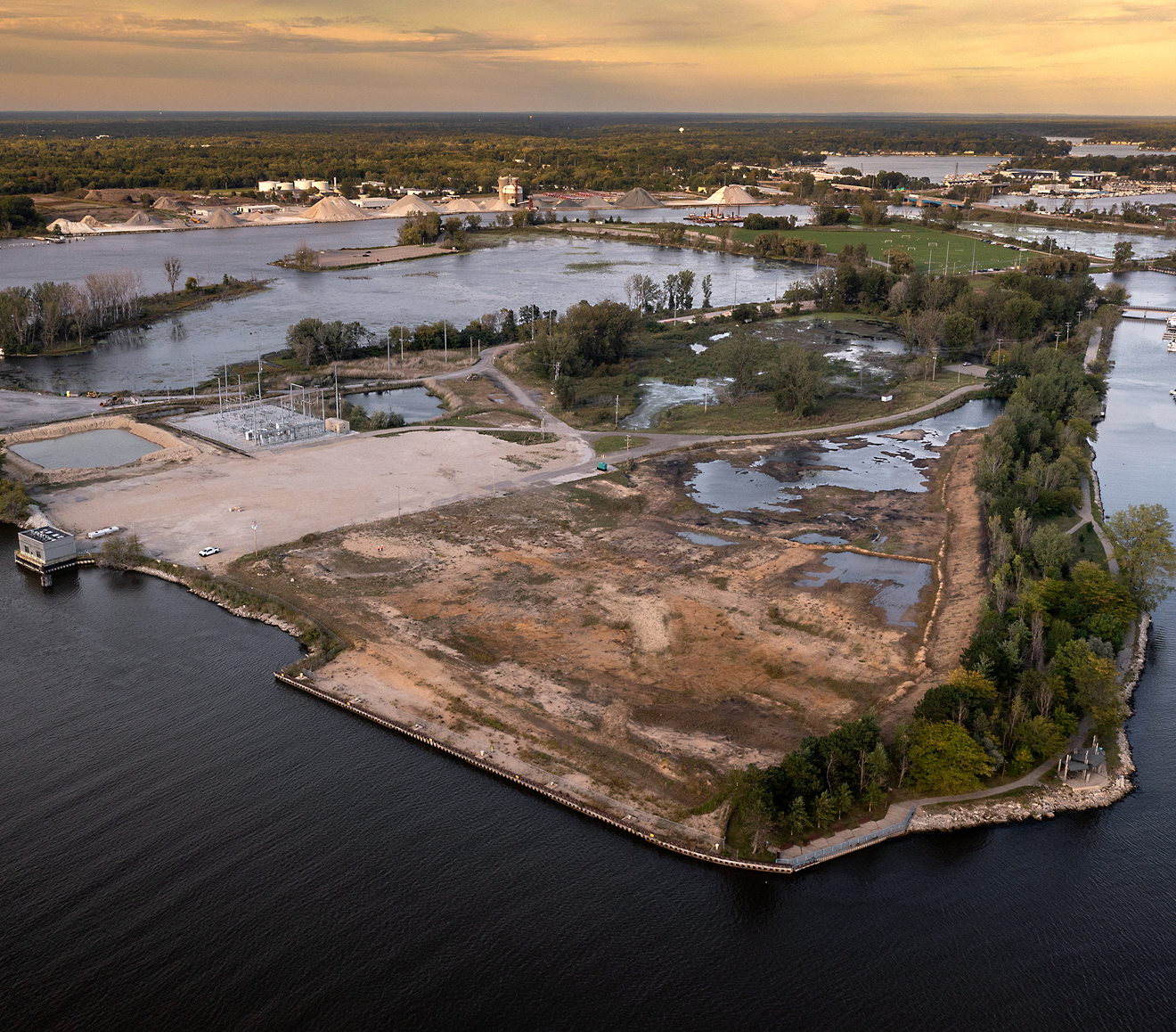
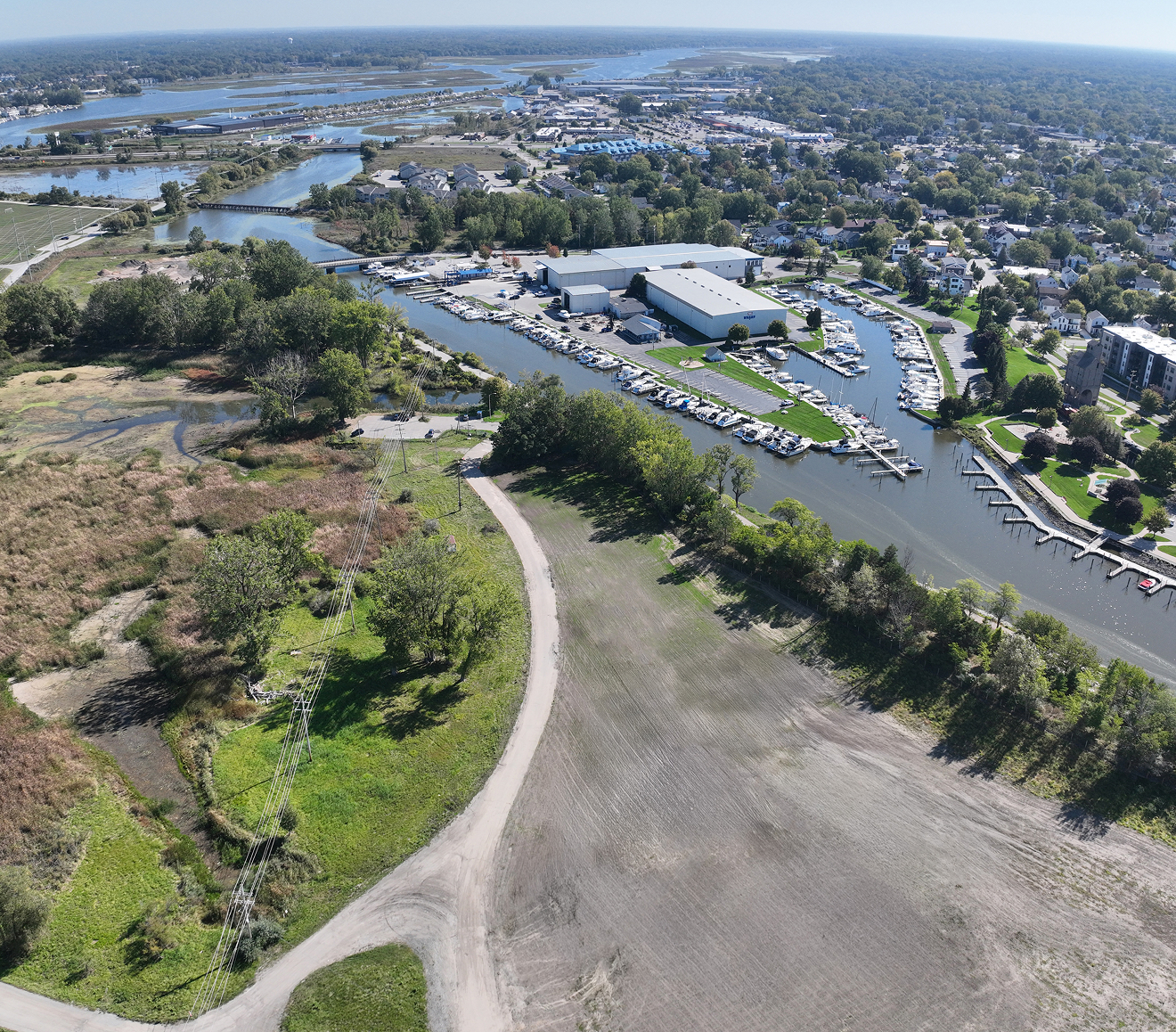
Located in the Grand River just north of downtown Grand Haven, the 140‑acre, man-made Harbor Island was created through various waste disposal practices over the past century. First documented as a “wild rice swamp,” the island gradually evolved into a center of industrial and municipal activity. Each role Harbor Island assumed left behind its own form of waste, reshaping the landscape and creating the complex environmental conditions seen today. Understanding this layered history is key to protecting Harbor Island and the surrounding area for the future.

ico1.png Harbor Island has been used as an industrial site since 1810

ico2.png The City’s Board of Light and Power operated on the Island until 2020

Click through to learn more about the history of the island and how we are working today to protect Harbor Island for tomorrow.  

  • slide

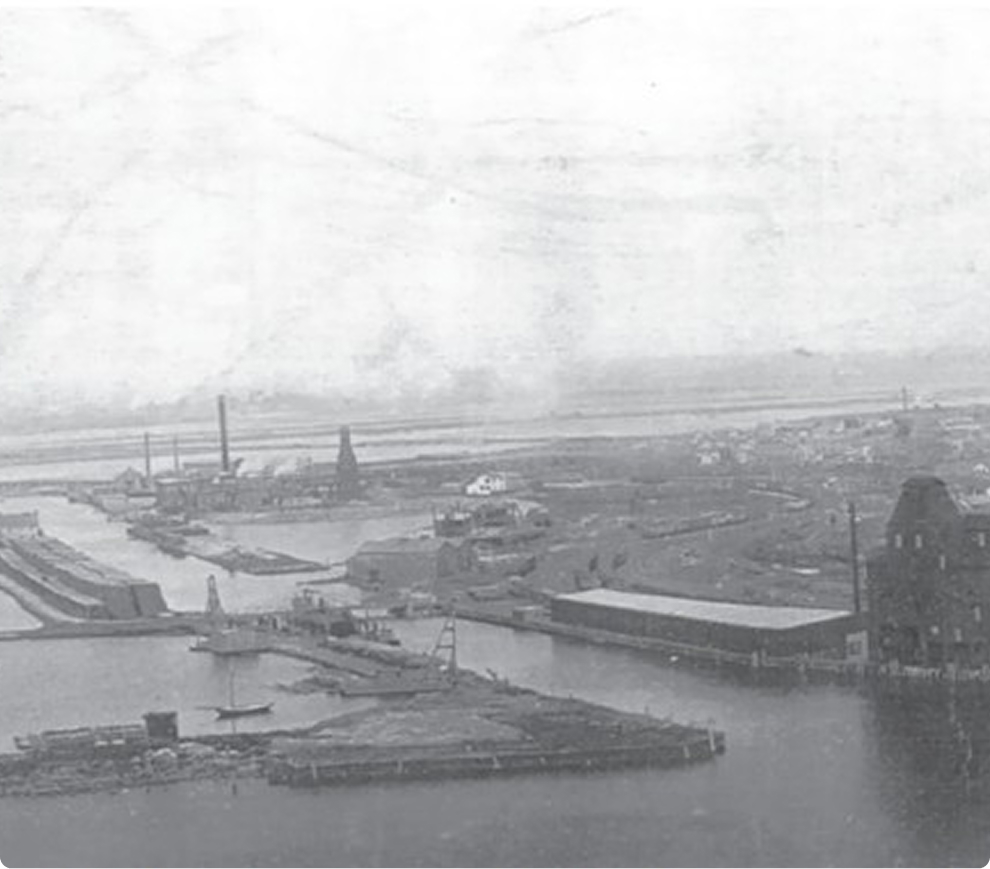
    The island’s first role began between the 1840s and 1880s, when four lumber mills operated along its shores. Lumber production generated substantial waste, slabs, cuttings, and sawdust, which was routinely disposed of in surrounding wetlands and low-lying areas. Over time, these materials accumulated to depths of up to ten feet, becoming the Island’s first large-scale infill. As the lumber industry declined in the mid‑1880s, shipyards replaced the mills, shifting the island’s role from resource extraction to shipbuilding and repair. 

  • slide

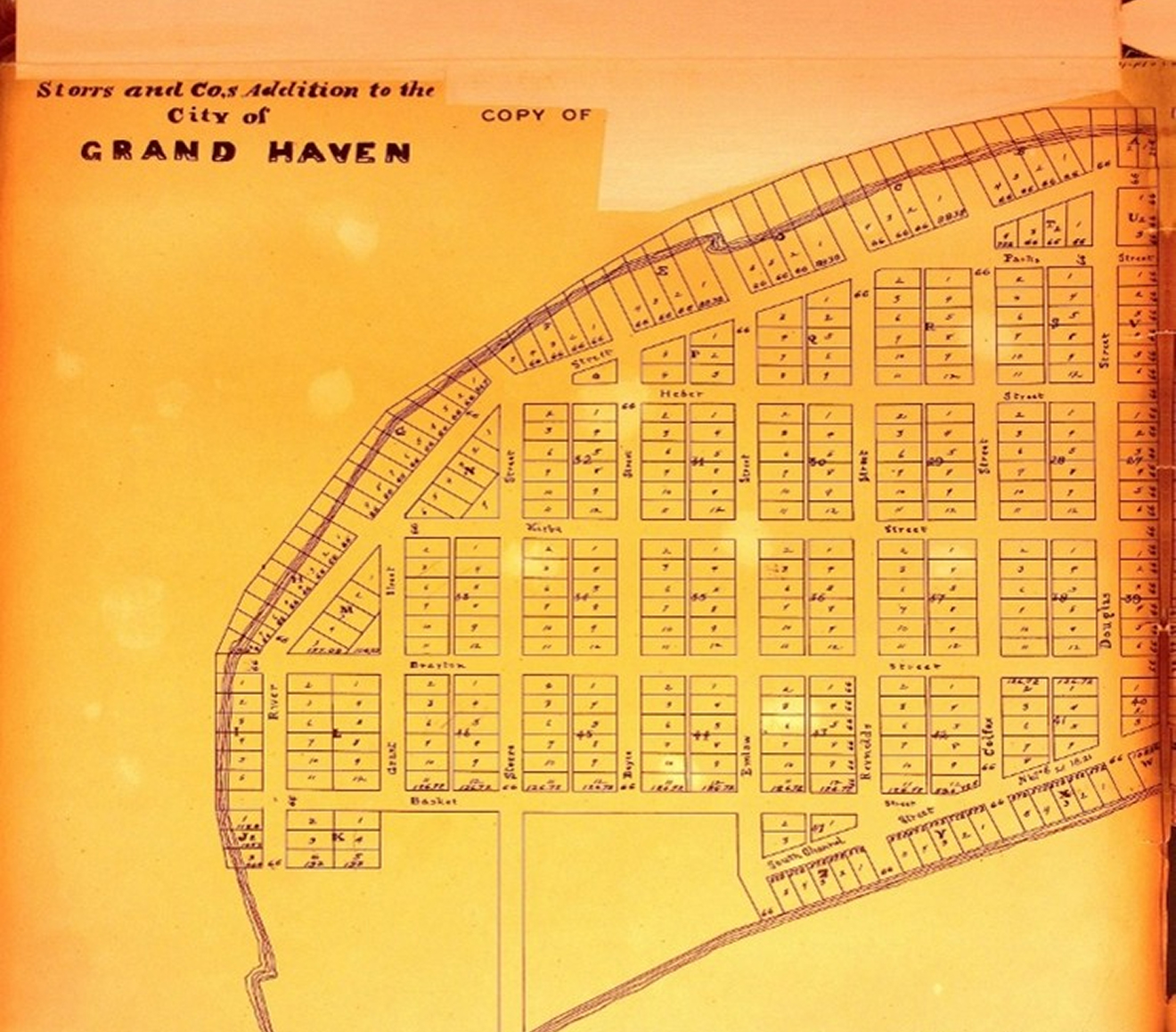
    During this transition, one of the mill owners, Wales F. Storrs, envisioned a new use for the land. In 1869, just two years after Grand Haven became a city, Storrs platted 365 residential lots on the western portion of Harbor Island to support the City’s rapid growth. However, even with the added infill from lumber waste, much of the Island remained wet or submerged. The residential expansion never took hold, and most of the lots were bought by commercial interests. 

    Island fact: Early plats help explain why property boundaries on Harbor Island are still irregularly shaped today. 

  • slide

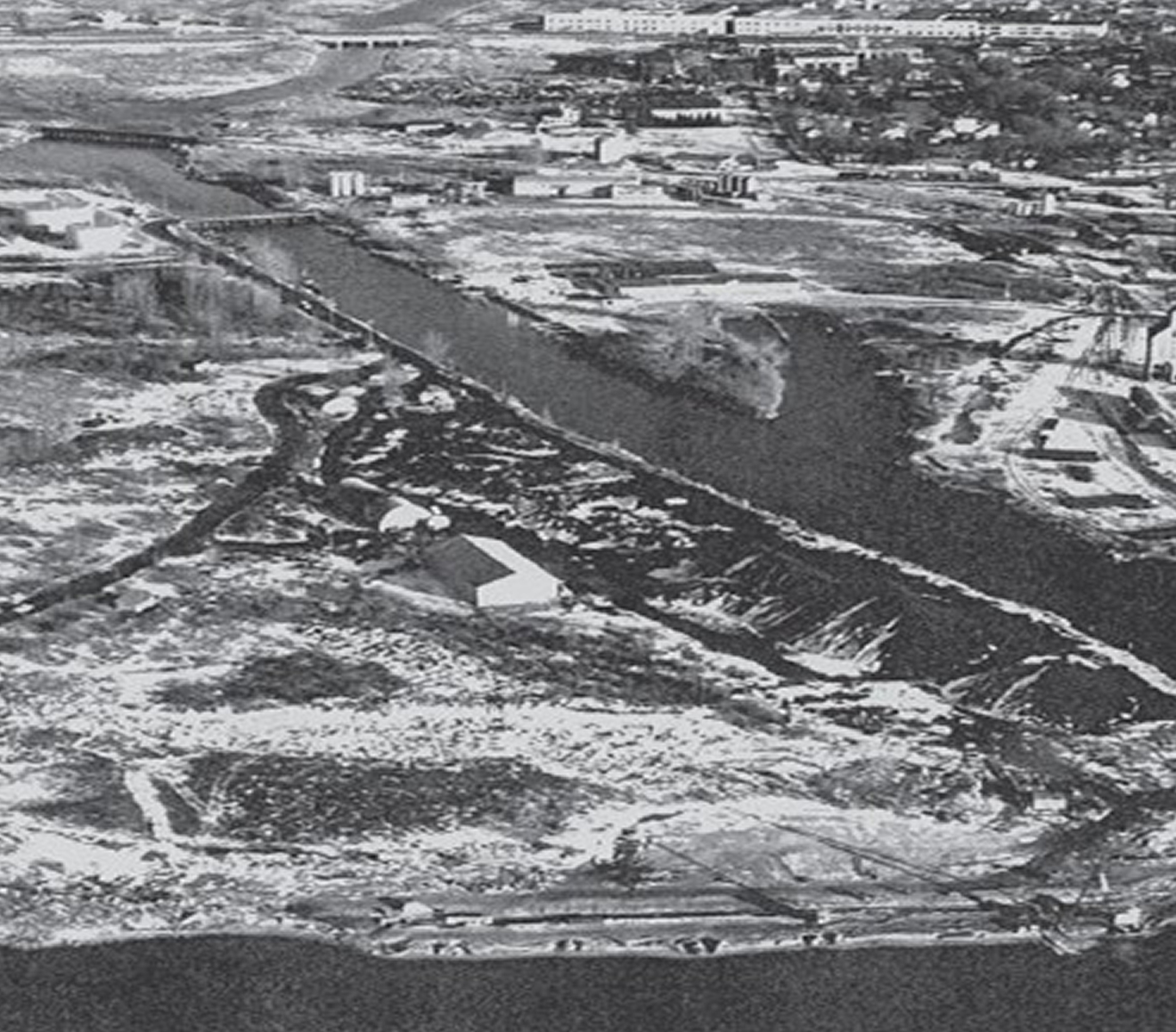
    At the turn of the 20th century, Harbor Island took on another role, this time as the City’s dump. Burnt municipal waste was deposited on the island, adding new layers of material atop the earlier lumber debris and setting the stage for future environmental concerns. Mounting pollution issues ultimately led to the dump’s closure in the 1970s. 

  • slide

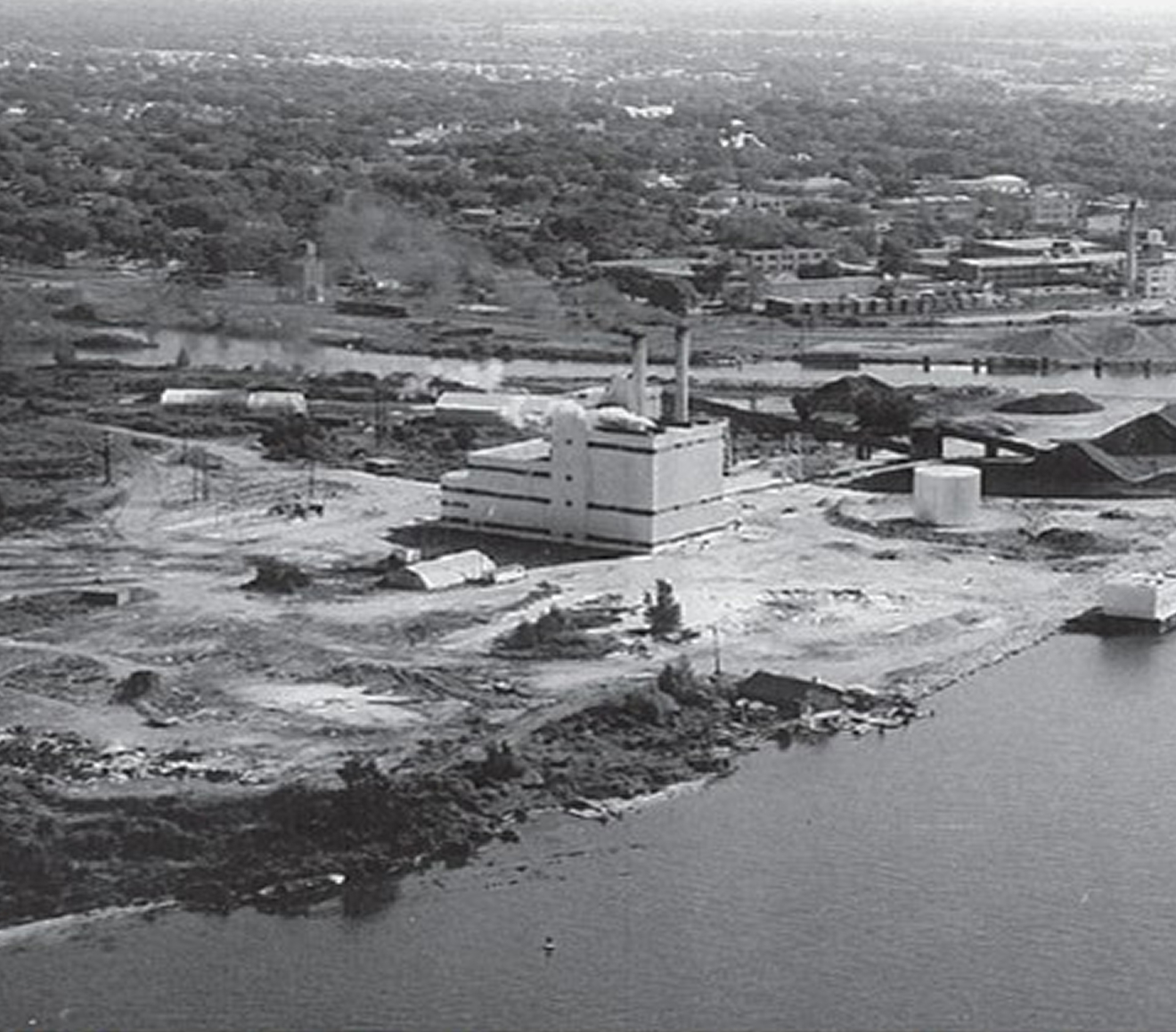
    A new role began in 1962 with the opening of the JB Sims Power Plant on the island. Like many coal-fired power plants nationwide, JB Sims Power Plant managed coal combustion byproducts, such as fly ash, bottom ash, and scrubber residues, on site. On Harbor Island, coal ash was placed in an impoundment known as Units 1/2 and was also used as fill to raise low areas around the plant. When those units were retired, newer clay-lined impoundments, Units 3A/B, were constructed to continue ash storage. 

    Island fact: The Board of Light and Power wasn’t the first operation to place coal on Harbor Island. Neitring Coal Dock operated on the south channel portion of the island starting in the early 1900s.

  • slide

    In the early 1980s, coal ash regulations changed nationwide. New rules prohibited using coal ash as fill and required it to be stored temporarily in regulated impoundments before being transported to licensed landfills. In compliance, ash produced at JB Sims Power Plant was pumped into Units 3A/B to dry before removal. Even with these new regulations, decades of earlier practices meant that residual coal ash remained on the island, adding to the cumulative legacy of waste materials. 

  • slide

    Today, the City of Grand Haven is actively addressing the environmental impacts left behind by these historical uses. Cleanup of the former coal pile site was completed in 2025, and the City continues to work closely with Michigan’s Department of Environment, Great Lakes, and Energy (EGLE) to develop and implement long-term remediation plans. These efforts include properly closing Units 1/2 and Units 3A/B and selecting remediation solutions that will protect groundwater and the Grand River for generations to come.  

  • slide

    Harbor Island’s future is being shaped not just by remediation plans but by the community’s voice. Residents from across Grand Haven are actively engaged in imagining what the island could become once cleanup is complete. Through public engagement, a range of site concepts were developed, exploring potential future uses. These concepts are not final plans but starting points for continued dialogue. As the project moves forward, community input will remain central to refining these ideas and guiding Harbor Island into the future. 

    View the public site concepts